
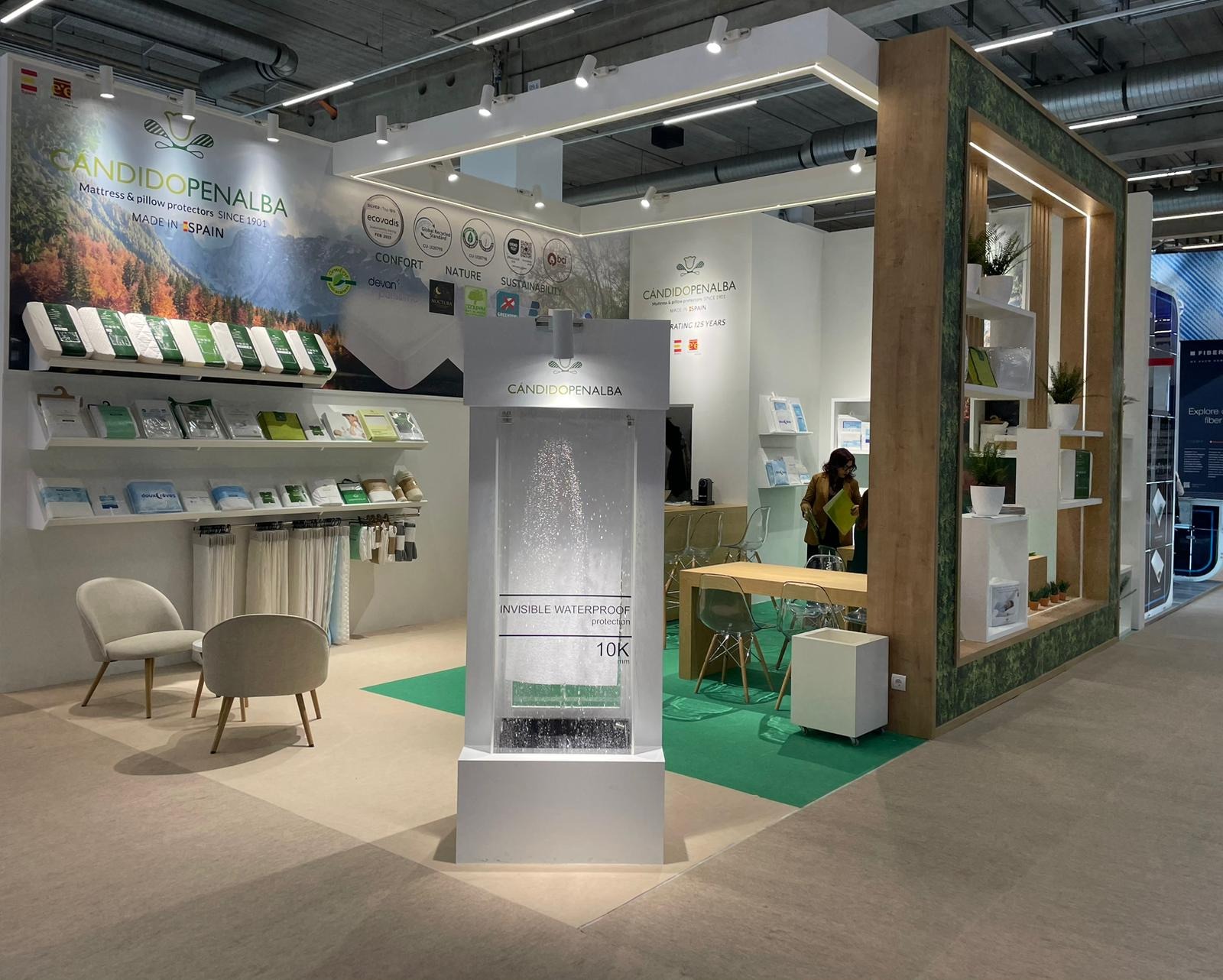
Every January, Frankfurt becomes the epicentre of the textile world. From 13 to 16 January 2026, the industry once again came together at Heimtextil, the leading international trade fair for home, decorative and contract textiles. A key space to analyse the real pulse of the market, identify trends and strengthen business relationships in a global context marked by transformation and uncertainty.
Heimtextil 2026 was much more than a product showcase. It offered a clear snapshot of an industry evolving through the combination of tradition, technological innovation and artificial intelligence, redefining what it means today to design, manufacture and market textiles.
A global fair, increasingly specialised
The figures confirm the relevance of the event. Heimtextil 2026 brought together nearly 48,000 professional buyers from 148 countries, maintaining stable attendance compared to previous editions, but with one key factor: visitor quality.
78% held senior management or decision-making positions, and 86% came from international markets.
This profile reinforces the fair’s positioning as a highly qualified platform focused on strategic decisions and medium- to long-term business relationships. In addition, more than two thirds of attendees were repeat visitors, a clear sign of trust in a complex economic and geopolitical environment.
Spain and the Valencian Community: a leading role
Spanish participation once again stood out. 75 Spanish companies took part in Heimtextil 2026, making Spain the third most represented European country, after Germany and Italy. Of these, 45 companies came from the Valencian Community, particularly from the L’Alcoià-Comtat and Vall d’Albaida regions.
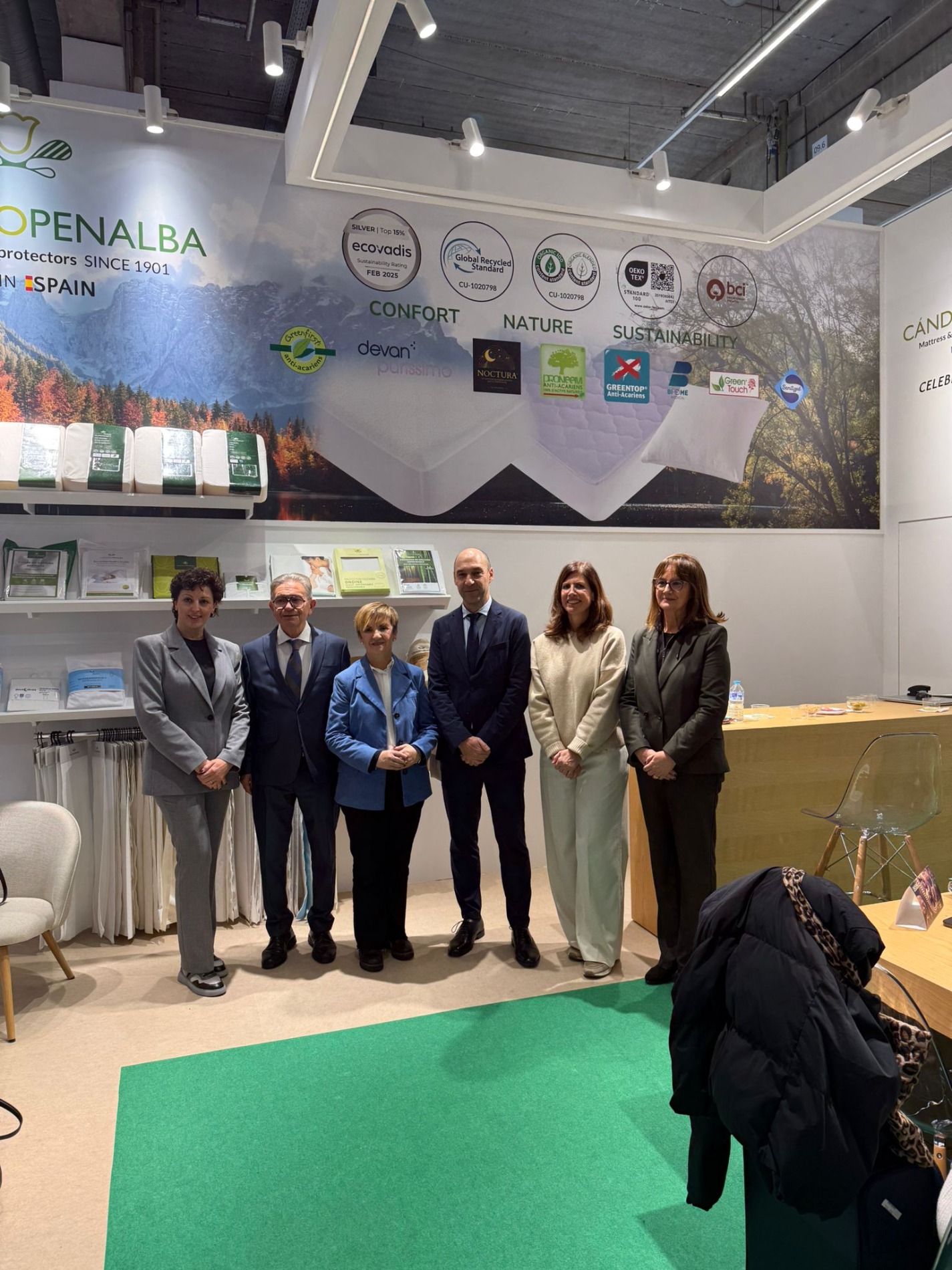
This strong presence reflects decades of industrial specialisation, continuous investment in design and a clear export-oriented approach. During the fair, Valencian stands were visited by institutional representatives, including Marián Cano García, reinforcing the message of support for internationalisation and the strategic importance of the textile sector for the regional economy.
A resilient sector growing internationally
Economic data supports this strength. In 2025, the Valencian textile industry reached a turnover of €2.186 billion, with a slight slowdown in the domestic market offset by a key figure: exports grew by 4.6%, exceeding €1.08 billion.
More than 50% of the sector’s business now depends on international markets, making internationalisation a structural pillar. In a context of more restrained domestic consumption, external growth has been decisive in maintaining employment and industrial stability.
The experience from within: relationships, market and strategy
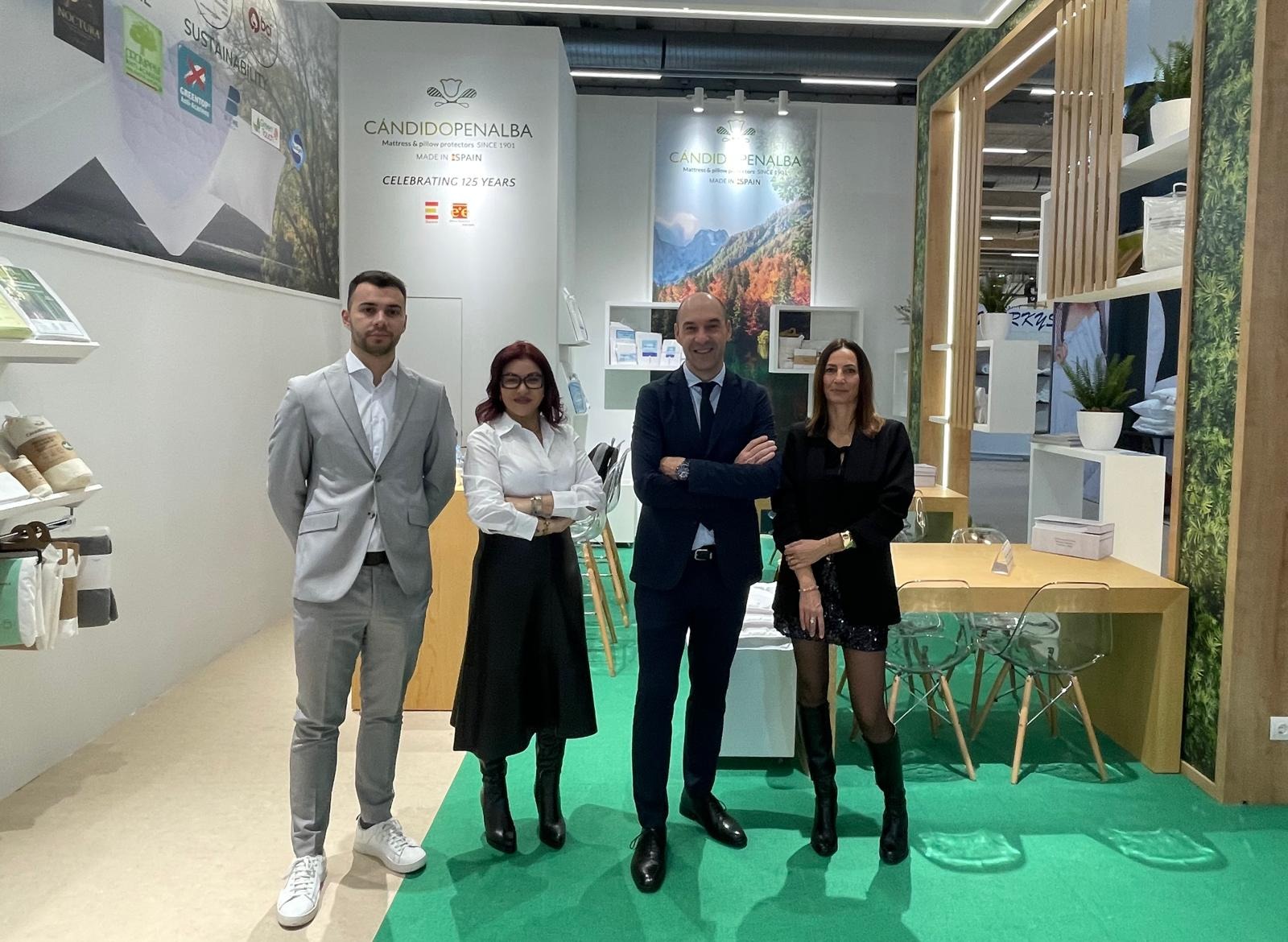
Beyond the figures, Heimtextil is a direct industry experience. As Javier from the Candido Penalba team explains, one of the fair’s greatest values is the opportunity to bring together current clients, potential customers and partners in a single space.
This personal contact has a real strategic impact. Meeting contacts face to face makes it easier to understand how they work, their priorities and decision-making processes, helping to fine-tune commercial proposals, product focus and follow-up strategies.
The fair also provides a clear overview of the market: which trends are gaining traction, how competitors are positioning themselves, which products attract the most interest and which are losing relevance. Even when it does not result in immediate orders, this information is essential for guiding commercial and product strategy.
Trends 2026/27: when craftsmanship meets artificial intelligence
Heimtextil is also a trend observatory. Under the theme “Craft is a Verb”, the 2026 edition highlighted a clear idea: craftsmanship does not disappear with technology—it evolves alongside it.
Artificial intelligence is increasingly integrated into the early stages of design—colour exploration, patterns and combinations—before returning to artisanal know-how, tactility and the sensory experience of textiles. There is a noticeable return to richer textures, heavier fabrics, natural materials and a warmer, more human aesthetic.
Technology enables personalisation, optimisation and scalability, but human judgement remains the defining factor in a product’s final value.
Global challenges, real opportunities
The fair also reflected the major challenges facing the sector: geopolitical volatility, changing trade policies and growing global competition. In response, three clear strategic pillars emerge for 2026:
-
Sustainability and circular economy as a real competitive advantage.
-
Digitalisation and artificial intelligence applied to design, production and logistics.
-
Market diversification to reduce risk and increase stability.
Conclusion: stability in times of change
For Candido Penalba, participation in Heimtextil 2026 has been a clear confirmation: a textile sector committed to quality, innovation, design and an international vision continues to play a leading role.
Frankfurt is not just a trade fair. It is where trends are anticipated, trust-based relationships are built and the direction of the sector is defined. In a changing world, Heimtextil remains the meeting point where tradition and the future of textiles move forward together.